
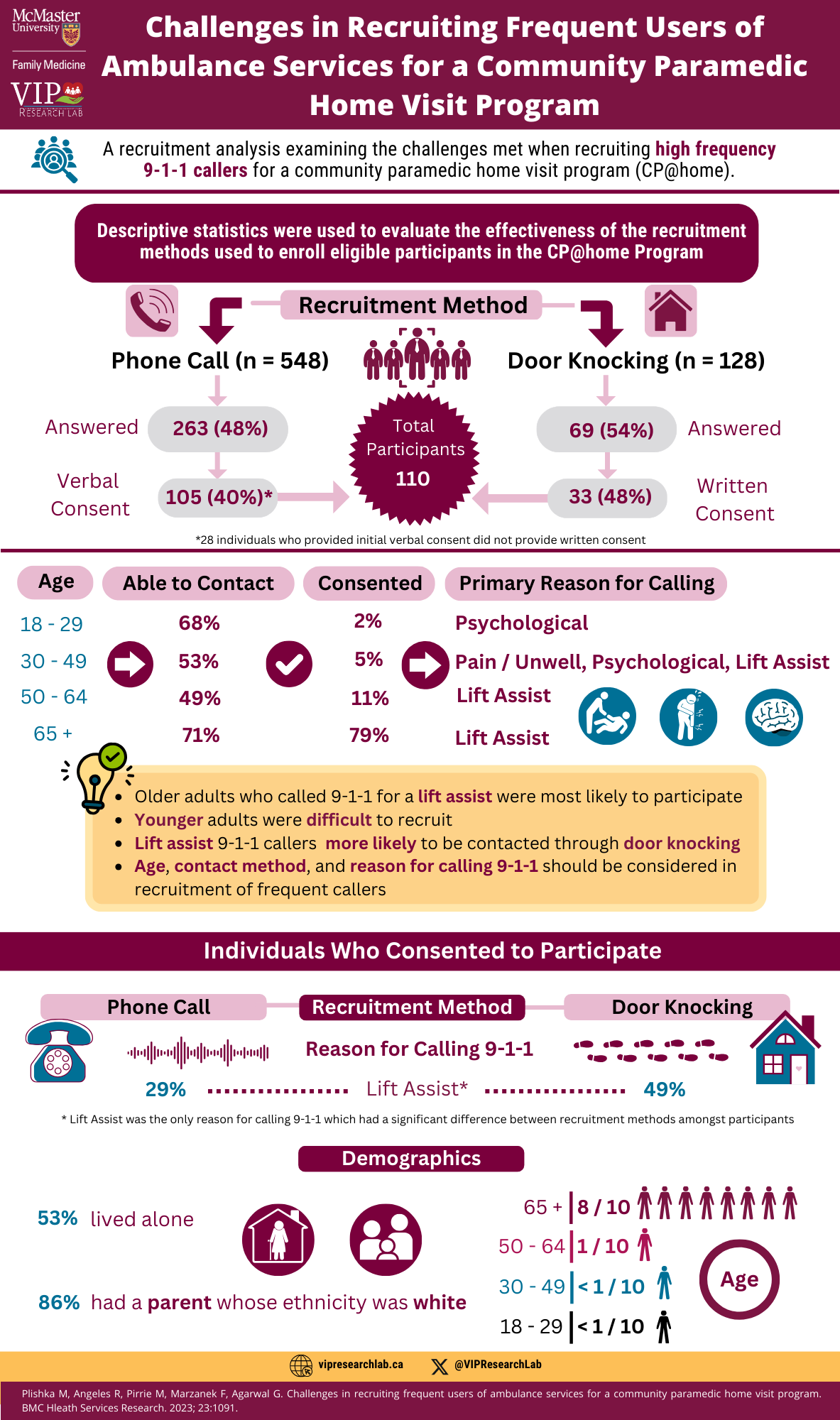
This infographic summarizes a study examining challenges in recruiting frequent users of ambulance services, defined as high-frequency 9-1-1 callers, into the Community Paramedicine at Home (CP@home) program. The infographic compares two recruitment methods: phone calls and door knocking. Of 548 individuals contacted by phone, 263 answered and 105 provided verbal consent, while of 128 individuals approached through door knocking, 69 answered and 33 provided written consent. A total of 110 participants were recruited.
The infographic highlights differences in recruitment success by age group and reason for calling 9-1-1. Adults aged 65 years and older were the most likely to consent, accounting for 79% of participants who enrolled, while younger adults were more difficult to recruit. Individuals who frequently called 9-1-1 for lift-assistance needs were the most likely to participate and were more effectively reached through door knocking than by telephone. Key findings emphasize that age, contact method, and primary reason for calling emergency services should be considered when recruiting frequent EMS users. Among those who consented, most were aged 65 years or older, over half lived alone, and the majority had a parent who was white. The infographic concludes that tailored recruitment strategies may improve enrolment of frequent ambulance service users into community paramedic home visit programs.
Download