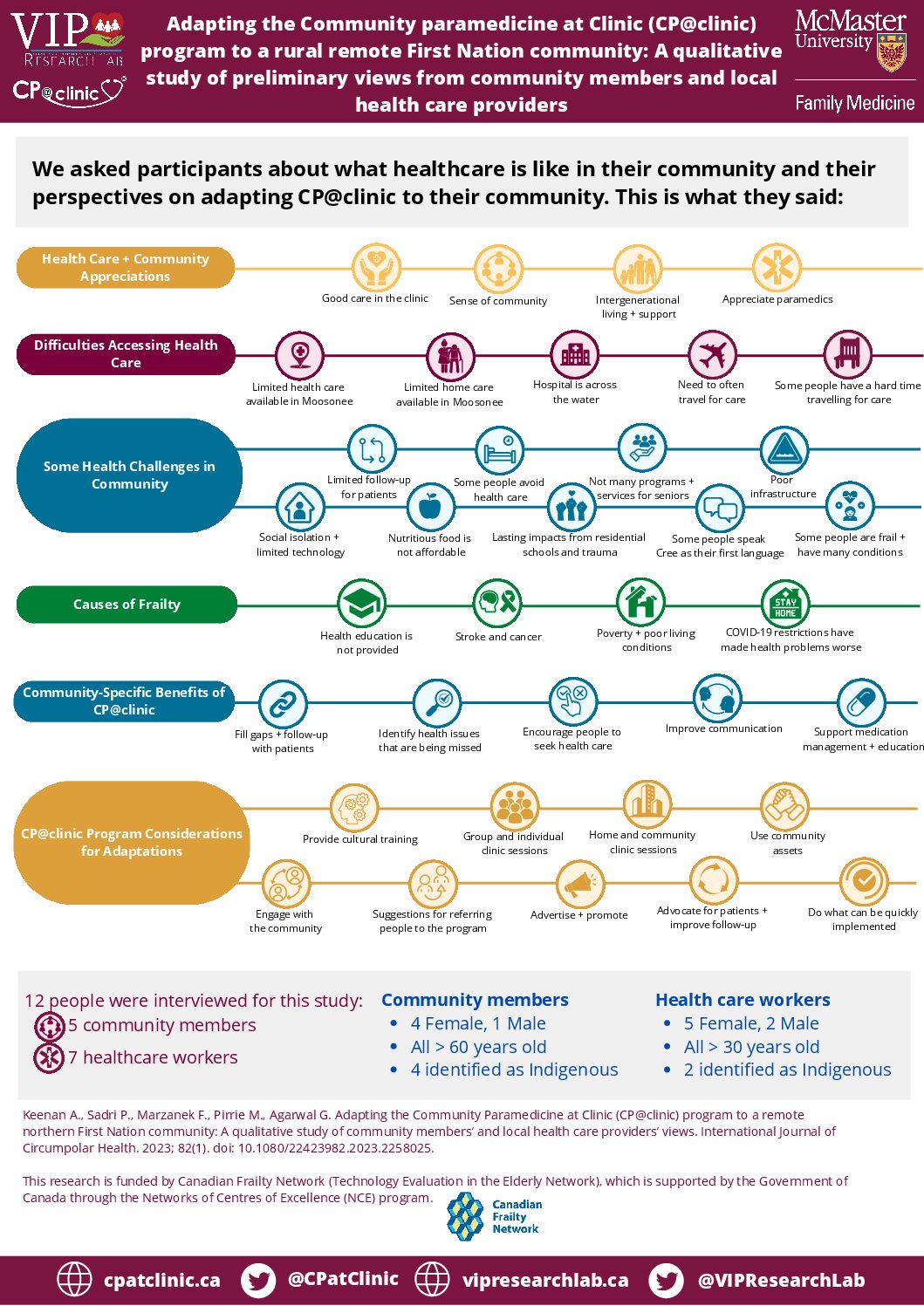
This infographic summarizes a qualitative study exploring how the Community Paramedicine at Clinic (CP@clinic) program could be adapted for a remote northern First Nation community. Researchers interviewed 12 participants, including community members and local healthcare workers, to understand community health challenges, existing healthcare gaps, and recommendations for implementing CP@clinic in a culturally appropriate and effective way.
The infographic identifies several healthcare challenges affecting the community, including limited access to healthcare services, limited home care and follow-up for patients, the need to travel for care, social isolation, poverty, poor infrastructure, language barriers, and the lasting impacts of residential schools and trauma. Participants also noted challenges related to chronic disease, frailty, affordability of nutritious food, and the impacts of COVID-19 restrictions on health and wellbeing.
Participants described several potential benefits of adapting CP@clinic for the community. These included identifying missed health issues, supporting medication management and health education, improving communication between patients and providers, encouraging healthcare engagement, providing follow-up care, helping fill healthcare service gaps, and strengthening connections within the community. Community members and healthcare workers also expressed appreciation for paramedics and recognized the value of community-based healthcare services.
The infographic highlights recommendations for adaptation, including providing cultural training, engaging community members throughout implementation, using local community assets, offering both home visits and community clinic sessions, providing individual and group programming, improving promotion and outreach, supporting referrals, and focusing first on changes that can be implemented quickly. The overall message is that successful adaptation of CP@clinic requires community partnership and locally tailored approaches that reflect the priorities, strengths, and healthcare needs of remote First Nation communities.
Download